
Introduction
In today’s hyperconnected world, AI phone tracking has become critical topics of debate. Artificial intelligence has transformed how we find lost phones, manage fleets, and protect our loved ones. But it has also fueled confusion — and in some cases, temptation — around tracking someone’s location without permission. While some websites claim you can instantly locate a phone using AI and a simple phone number, the reality is starkly different: without consent, it’s not just unethical — it’s illegal.
This article breaks down what AI-powered phone tracking can actually do, where the legal and moral lines are drawn, and why consent isn’t optional — it’s essential.
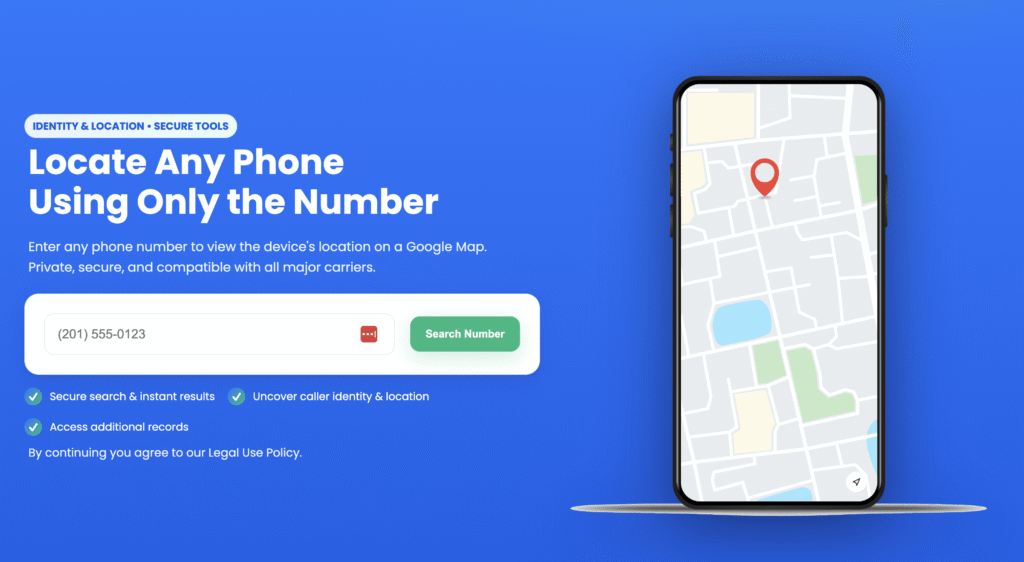
Most people have heard the claim: “You can find anyone’s phone location instantly — no app, no permission, totally anonymous.”
The internet is full of sites that promise exactly that — instant results powered by “artificial intelligence.” They say you can enter a number and get the phone’s GPS location, even send a “stealth command” that reveals exactly where the person is.
The Allure of Instant Location Access
The truth is in their phone. This may sound cliché, and even simplistically unbelievable. However, it is true, no matter what the situation you can always find out the truth by examining someone’s phone.
It sounds futuristic, almost magical — and that’s the problem. Because while AI has made legitimate tracking more efficient than ever, it hasn’t made it possible (or legal) to track someone without their consent.
The truth is simpler and far more important: real phone tracking only requires the number of the phone you want to locate. Anything else is a privacy violation and, in most countries, a criminal act.
What AI Can Actually Do in Location Tracking
AI has dramatically improved how we use and understand location data — but it operates within strict boundaries.
Here’s what’s real:
- Enhanced accuracy: AI helps correct GPS drift and improves mapping precision, especially in urban areas.
- Predictive location intelligence: Systems can learn travel patterns to optimize routes or predict destinations.
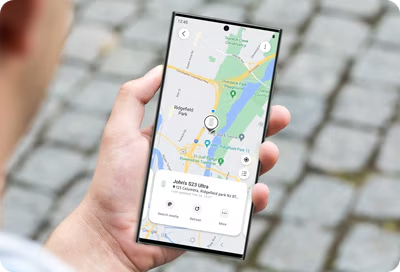
- Security and recovery tools: AI powers systems like “Find My iPhone” or Google’s “Find My Device,” which can locate a lost phone — but only if you’re the registered owner or have permission.
AI doesn’t grant magical access to someone else’s data. It processes existing, legally obtained information faster and smarter. The myths you see online — “stealth pings,” “private commands,” “undetectable access” — are marketing tricks, not technological reality.
The Legal Line You Can’t Cross
Every major privacy law — from the Electronic Communications Privacy Act (ECPA) in the U.S. to the General Data Protection Regulation (GDPR) in Europe — is clear:
Tracking someone’s device without their knowledge or consent is illegal.
Even if your intentions are good (say, finding out where your teenager went or confirming a partner’s honesty), bypassing consent violates their privacy rights. The penalties can be severe: large fines, criminal charges, and permanent damage to relationships and reputations.
Consent isn’t just a checkbox — it’s the ethical cornerstone of technology use. Without it, tracking becomes surveillance.
Why Consent Matters Beyond the Law
Consent isn’t only about legality — it’s about trust.
When you track someone with their permission, you’re saying: “I respect your boundaries, but I also care about your safety.”
When you do it secretly, the message changes completely: “I don’t trust you, and I’ll go behind your back to find out.”
That difference matters. In families, workplaces, and relationships, transparency keeps technology from becoming a weapon. Parents who use tracking apps responsibly teach digital accountability. Companies that track employees ethically build safer, more productive work environments.
The line is simple: no consent, no tracking.
How Scammers Exploit Curiosity
Many websites — some even using the language of AI and privacy — exploit people’s emotions. They prey on suspicion, fear, and desperation.
You’ll often see phrases like:
- “Get anyone’s GPS in seconds.”
- “Send a stealth command.”
- “Anonymous location lookup.”
These sites almost always do one of three things:
- Phish your data — they collect your information or the number you searched.
- Charge hidden fees — you pay for results that never come.
- Install malware — they trick you into downloading tracking software that monitors you instead.
No legitimate technology allows you to track a phone without consent. If a website claims otherwise, it’s either lying or operating illegally.
Safe and Legal Ways to Track a Device
If your goal is safety or peace of mind — not intrusion — there are lawful, transparent tools designed exactly for that purpose.
- Family Locator Apps:
- Life360, Google Family Link, and Apple Family Sharing all allow location sharing within approved circles.
- Every member opts in and can turn off sharing at any time.
- Device Recovery Systems:
- Use Find My iPhone or Find My Device for lost or stolen phones.
- These services work only for registered owners and protect against unauthorized access.
- Workplace Solutions:
- Companies can use tools like Fleet Complete or Hubstaff to track company devices — with employee consent and clear policies.
- Parental Monitoring Software:
- Tools like Bark or Qustodio offer supervision for minors under parental authority, following legal standards for child protection.
The difference between these tools and the “instant tracker” scams online is clear: transparency, consent, and control.
AI’s Positive Role in the Future of Location Technology
AI is revolutionizing location technology — but in responsible ways.
Here’s where it’s heading:
- Predictive Safety Alerts: AI can identify irregular movement patterns (like a child straying from a safe zone).
- Improved Data Privacy: Machine learning helps anonymize data, making it possible to analyze patterns without identifying individuals.
- Fraud Prevention: Businesses use AI-based geolocation to detect unusual login activity or prevent identity theft.
These are innovations built with consent, not against it. The most forward-thinking developers are those building tools that empower users — not exploit them.
Common Myths About “Anonymous” Tracking
Let’s set the record straight:
| Myth | Reality |
|---|---|
| You can track any phone by entering its number online. | False. Carriers and OS developers prevent this for privacy and legal reasons. |
| AI can send “stealth commands” to reveal GPS data. | Impossible without authorized software and user permission. |
| Anonymous tracking websites are safe and private. | They’re scams designed to steal your data or money. |
| You don’t need consent if you’re a parent or spouse. | Still false. Laws require consent, except for minors under your care. |
Understanding these realities protects you from both legal risk and digital exploitation.
The Responsible Path Forward
Artificial intelligence is a tool — powerful, neutral, and amoral on its own. The question is how we choose to use it.
When it comes to phone tracking, the responsible path is clear:
- Always get consent.
- Use legitimate tools.
- Respect privacy as much as you value safety.
By staying on the right side of the law — and of ethics — you’re not just protecting others. You’re protecting yourself from scams, liability, and broken trust.
Conclusion: Privacy Is the Real Power
AI can locate a phone. It can predict travel patterns, recover lost devices, and improve safety.
But it cannot replace consent.
The future of phone tracking isn’t about control — it’s about cooperation. The most advanced form of intelligence, artificial or human, is knowing where to draw the line.